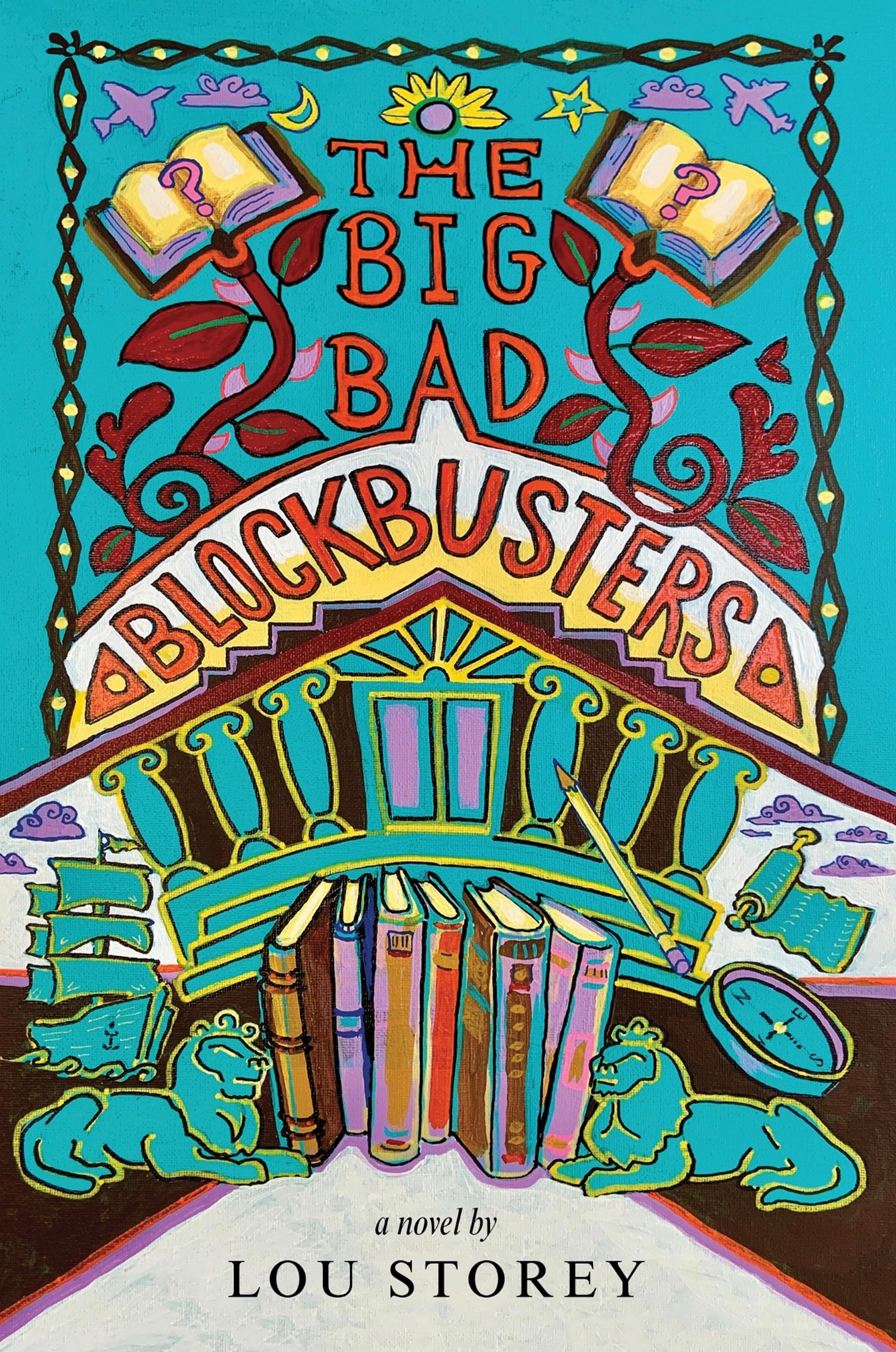
A Novel by Lou Storey
Five misfits. One dying library. New York City, 1983. When an unlikely team is hired to save a great cultural institution through blockbuster exhibitions, what follows is equal parts comedy, heartbreak, betrayal — and unlikely triumph.
New York City, 1983. The Morton-Lenning Library, one of the great cultural landmarks of the world, is in trouble. Budgets have been gutted, attendance is flagging, and the institution faces a choice that sounds less like a mission statement and more like a threat: change or die.
The solution: blockbuster exhibitions. Large-scale, crowd-drawing, revenue-generating shows of the kind that have transformed art museums into destinations. Someone will have to make that happen. That someone is Amanda Clark — a middle-aged single mother, recruited from a small museum in Maine — who makes an unconventional choice: she hires people with something to prove.
At the center of it all is Gordon Katten, an oddball by any measure — slow on social cues, asexual, and possessed of a distinctive artistic vision that expresses itself most naturally in intricate doodle-art he produces almost unconsciously. Working alongside him is Vicky Van Horn, his talkative and fiercely loyal art handler; Lawrence Martin, whose calm presence becomes the team's quiet moral center; Malta Johnson, the Library's formidable building manager; Dolores Brezinski, a registrar who proves herself one of the team's most heroic members; and Maria Rollanda, a Vatican-trained conservator adrift in New York City, mourning a sudden loss.
The exhibitions they build over the following decade are remarkable: from a landmark show on forbidden books to the Dead Sea Scrolls, the Statue of Liberty's centennial to Frankenstein: Science and Monsters. Each chapter opens with a fictional press release announcing that year's exhibition — placing the team's work in the public eye even as the novel pulls us behind the curtain to watch it being made.
By 1988, the administration has changed, and with it the culture of the institution. The team presses on, but the ground beneath them has shifted. A show on the five stages of grief arrives at exactly the moment the reader understands it must. And in 1990, the exhibition no one has sanctioned: Persecution to Pride — Gay Rights Now, organized in secret against the explicit wishes of those in charge.
The Big Bad Blockbusters is a novel about what it costs to care about something — a building, a mission, a collection of people who became, without planning to, a family. It is funny, and then it isn't, and then it is again.
Storey's story is the almost-true narrative of an exhibition designer doing his very best, often in the face of the worst. Hilarious and touching by turns, the book is chock full of wisdom, especially about education, museums, therapy, teamwork, and other things meant to improve the world.
Storey skewers the egos, internal machinations, and warring agendas behind the scenes at one of the city's beloved but beleaguered institutions — with delicious turns of phrase, an insider's perspective, and humor that ranges from wry to gallows.
A curtain being lifted on the personalities and relationships that impact the final product experienced by the public. A great read!
Told with honesty and exhilaration through the eyes of his compelling characters and fascinating histories, Storey makes the extraordinary look effortless.
Photo: Steve Theccanat
Lou Storey has spent his life at the intersection of art, psychology, and story — and his debut novel is the place where all three finally converge.
Trained as a visual artist at Pratt Institute, Storey built an early career in the New York gallery world before working as the exhibition designer at The New York Public Library from 1984 to 1994. He later earned a doctorate in psychology and spent a decade in clinical practice, while continuing to make art that functioned as a visual diary of his thinking.
The Big Bad Blockbusters recounts aspects of his years at the Library — an experience that gave him a front-row seat to one of the more improbable dramas in American cultural life. The Library in the 1980s was under severe pressure to justify its existence and generate revenue. The solution: blockbuster exhibitions. The means: a small, unlikely team of people who cared too much.
His short fiction and creative nonfiction have appeared in The New Yorker, New York Times Tiny Love Stories, River Teeth's Beautiful Things, and numerous other publications. He is a 2024 finalist for the Tennessee Williams New Orleans Literary Festival, a Flannery O'Connor Peacock Guild member, and a featured artist in the documentary film The Creative Imperative.
He lives in Savannah, Georgia with his husband Steve.
Lou Storey is available for interviews, readings, podcast appearances, book club conversations, and speaking engagements related to creativity, institutional life, and the writing process.
Review copies available upon request